Forex fundamental analysis (Part 5): housing data, from building permits to home sales
Housing is one of the first sectors to react to interest-rate changes. This part covers building permits, housing starts, and new, existing and pending home sales, and what each one tells you about the economy.
Contents
Housing data are usually treated as second-tier news and move price less than NFP or inflation. But they have one important feature: housing is the first place to feel the effect of interest rates.
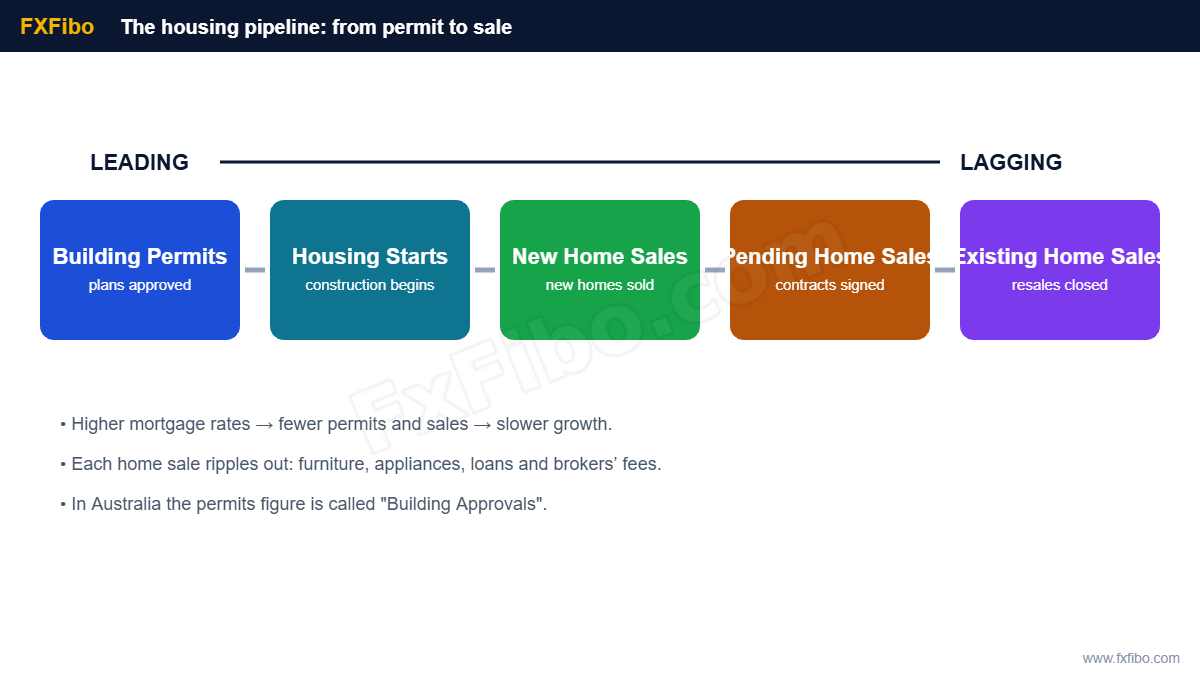
When mortgage rates rise, buyers pull back, builders start fewer projects, and a few months later the slowdown spreads to the whole economy. So housing data are an early warning about the path of growth.
Why housing matters so much to the economy
Selling a home is not just one transaction. Behind it come a bank loan, agents’ fees, furniture, appliances, renovation and hiring construction workers. Every home sends a wave of spending through the economy.
Building permits
The number of permits issued for new residential construction.
- Why it matters: the most leading housing indicator, because a permit comes before construction starts.
- Timing (US): monthly, around the middle of the following month, together with housing starts.
- In Australia: published as "Building Approvals", about a month after the end of the month.
- Effect: higher than forecast → positive for the currency.
Housing starts
The number of homes on which construction began in the previous month. It gives a real picture of building activity.
New home sales
The annualised number of new single-family homes sold in the previous month.
- Timing: monthly, about 25 days after the month ends.
- Note: this series is volatile and heavily revised; don’t read too much into one month.
Pending home sales
Homes with a signed sales contract where the deal hasn’t closed yet.
- Why it matters: it usually moves one to two months ahead of existing home sales, so it works as a preview.
- Timing: late in the following month.
Existing home sales
The annualised number of resale homes where the sale has closed. The largest part of the US housing market.
- Timing: about three weeks after the month ends.
- Effect: higher than forecast → positive.
Mortgage rates and applications
Every Wednesday, the US Mortgage Bankers Association (MBA) publishes the 30-year mortgage rate and the number of loan applications. It is the fastest housing data available. For example, in the week to 20 November 2026, purchase applications rose 10.2% even with rates at 7.38%.
Summary
| Data | Leading or lagging | Typical timing |
|---|---|---|
| Building permits | Strongly leading | Mid following month |
| Housing starts | Leading | Mid following month |
| Pending home sales | Leading | Late following month |
| New home sales | Coincident | About 25 days later |
| Existing home sales | Lagging | About 3 weeks later |
| MBA applications | Weekly | Every Wednesday |
Housing data move price less than inflation and jobs. They are most useful for confirming or questioning the growth trend, especially while a central bank is raising rates.
The complete forex fundamental analysis series
- Part 1: What fundamental analysis is and what moves currencies
- Part 2: Inflation, interest rates and central banks
- Part 3: Growth data: GDP, retail sales, production and PMI
- Part 4: Jobs data: NFP, unemployment and jobless claims
- Part 5: Housing data and how it moves currencies (you are here)
- Part 6: The US Dollar Index (DXY) and fiscal vs monetary policy
This article is educational and is not investment advice.
Questions? Telegram support @fibonacci_chart
Forex and CFD trading carries a high level of risk due to leverage and you may lose more than your initial capital. Content on this site is educational and not investment advice.
Get curated analysis every Friday
5 key events, 2 curated analyses and one tool or lesson — one-click unsubscribe.